A Boater’s Guide to Fort Lauderdale Waterfront Living
March 5, 2026
March 5, 2026
If you want to walk out your back door and cast off within minutes, Fort Lauderdale makes that dream realistic. The city caters to boaters, but the details matter. Canal width, bridge heights, tides, seawalls, and permits can shape the home that fits your boat. This guide shows you how to match property type, route, and marina options to your vessel so you buy with confidence. Let’s dive in.
Fort Lauderdale is a true yachting hub with deep-water marinas, professional service yards, and year-round boating weather. Facilities like Pier Sixty-Six offer megayacht-scale slips, concierge support, and very high-capacity shore power for large vessels, all close to Port Everglades for quick ocean access (Pier Sixty-Six Marina overview). Nearby, the 17th Street Yacht Basin provides boutique face-dock and interior slips in a prime inlet location, often used by larger yachts for short stays or events (17th Street Yacht Basin details).
Downtown, the Las Olas Marina redevelopment focuses on big-boat capacity with walkable access to Las Olas Boulevard, making it attractive if you want city life paired with large-vessel berthing (Las Olas Marina profile). Together, these facilities create a realistic path whether you plan to dock at home, split time between a home dock and marina, or berth a large yacht at a superyacht facility.
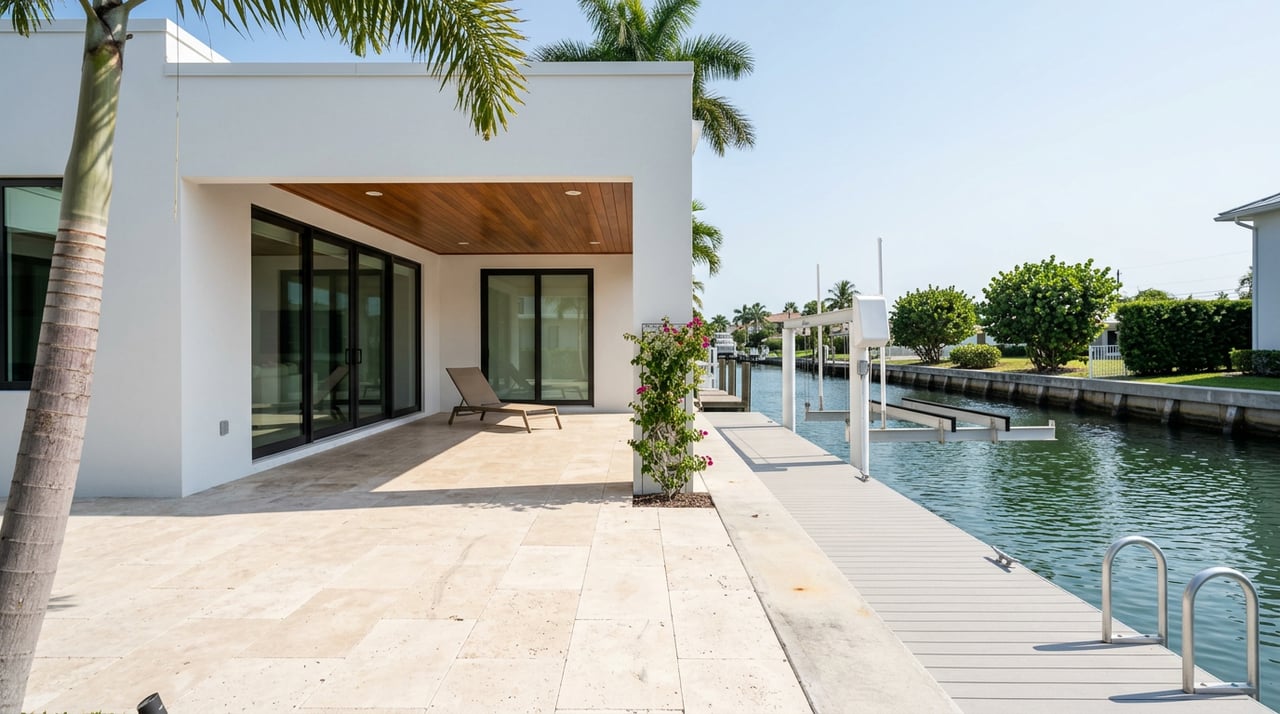
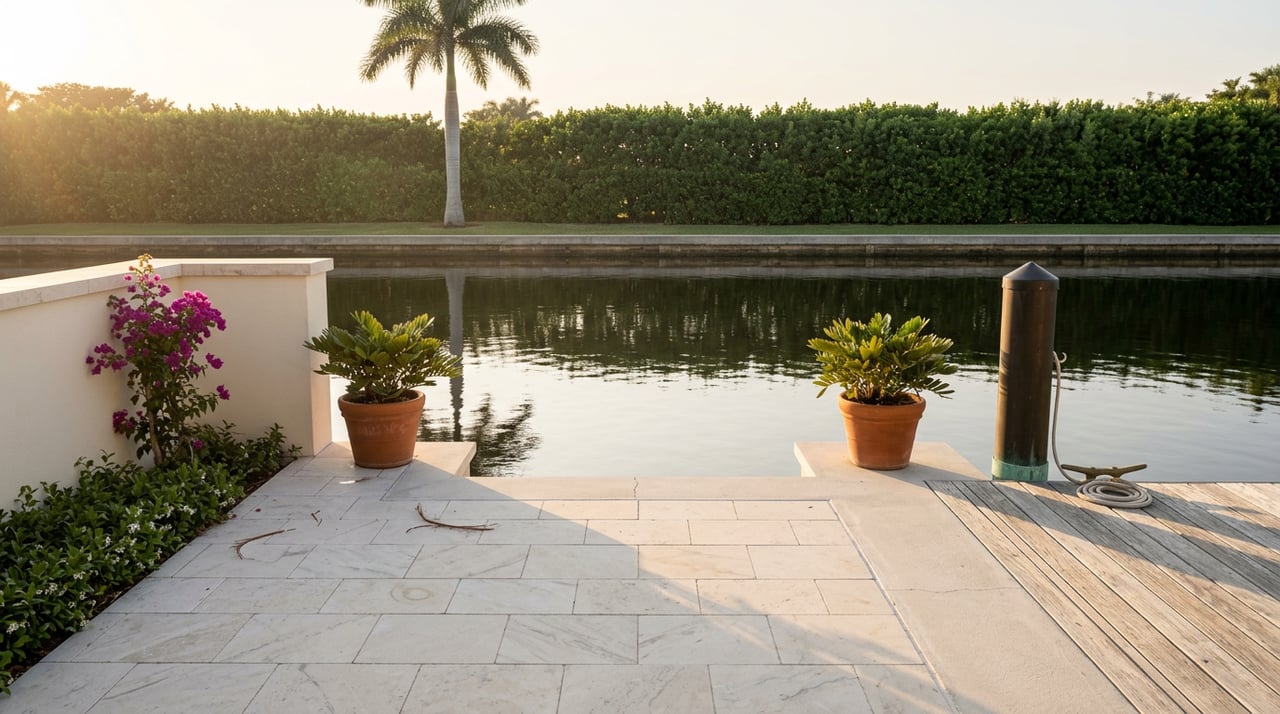
Canal-front homes sit on residential canals that tie into the Intracoastal Waterway. These canals often allow private docks or lifts and are ideal for small to mid-size boats. Canal width and depth drive your practical limits on length and beam. A widely used planning guide is the 30% rule: keep vessel length to about 30 percent of the canal width where you moor. It is not a legal standard, just a conservative rule of thumb. Depths vary by street and dredging, so verify local soundings during due diligence.
Riverfront parcels along the New River, Tarpon River, or Middle River can offer larger turning basins and room for long docks that suit mid to large yachts. The tradeoff is transit planning. Exiting to the Intracoastal or inlet often involves scheduled or regulated drawbridges, so you will time departures and returns around posted openings and any rush-hour restrictions. The U.S. Coast Guard’s drawbridge rules for this area are published in 33 CFR and outline routine schedules by bridge and waterway (USCG drawbridge regulations).
Homes with Intracoastal frontage have premier water views and ocean access, but they also see more wake and traffic. Barrier-island parcels offer the fastest ocean runs, yet private dock options may be limited due to state sovereign lands and coastal construction constraints. If you want the ocean run above all else, weigh private dock potential carefully and consider a marina-first plan nearby.
Your air draft and route to the inlet are just as important as your LOA and draft. A few key examples help set expectations:
Tide matters. Published bridge clearances are conservative planning numbers, and the actual clearance at a given time can vary with tide and wind. Check the posted gauges and NOAA guidance when planning an approach, especially for a tall flybridge or hardtop (Coast Pilot context on clearances).
You have three common ways to manage your boat in Fort Lauderdale:
Representative local options include:
Before you count on a slip, call the dockmaster to confirm current LOA, draft, power availability and transient or long-term options.
Most private docks include a seawall or bulkhead, finger piers or a T-dock, pilings or dolphins, and a lift or davits. Many residential pedestals offer 30A or 50A power, while superyacht marinas advertise higher amperage and three-phase service for larger vessels. Verify actual amperage and pedestal type before assuming a property can support your yacht’s electrical load (large-yacht power context).
Permitting for docks, lifts, dredging and seawalls often involves the city or county, state environmental agencies, and U.S. Army Corps of Engineers. Broward County’s regional standard establishes a minimum tidal flood barrier elevation of 5.0 ft NAVD88 for new or substantially repaired barriers and requires disclosures for tidally influenced properties. These rules affect budgets and timelines, so review them early in due diligence (Broward tidal-flood barrier standard). State and federal guidance also limit dock footprints and shading over seagrass, and often require light-permeable decking or size limits for platforms and finger piers (environmental best practices).
Use this short list to keep your search boat-first and proactive:
Choosing the right waterfront home starts with your boat’s dimensions, route to the inlet, and a clear plan for dockage, power and permits. If you want a smooth, data-backed search and a partner to coordinate engineers, dockmasters and associations, let’s talk. Request a Free Concierge Consultation with Roi Danon to match your boat and lifestyle to the right Fort Lauderdale property.
October 15, 2026
October 8, 2026

October 1, 2026
September 24, 2026
September 17, 2026

September 10, 2026
September 3, 2026
September 3, 2026
August 27, 2026
Get assistance in determining current property value, crafting a competitive offer, writing and negotiating a contract, and much more. Contact me today.