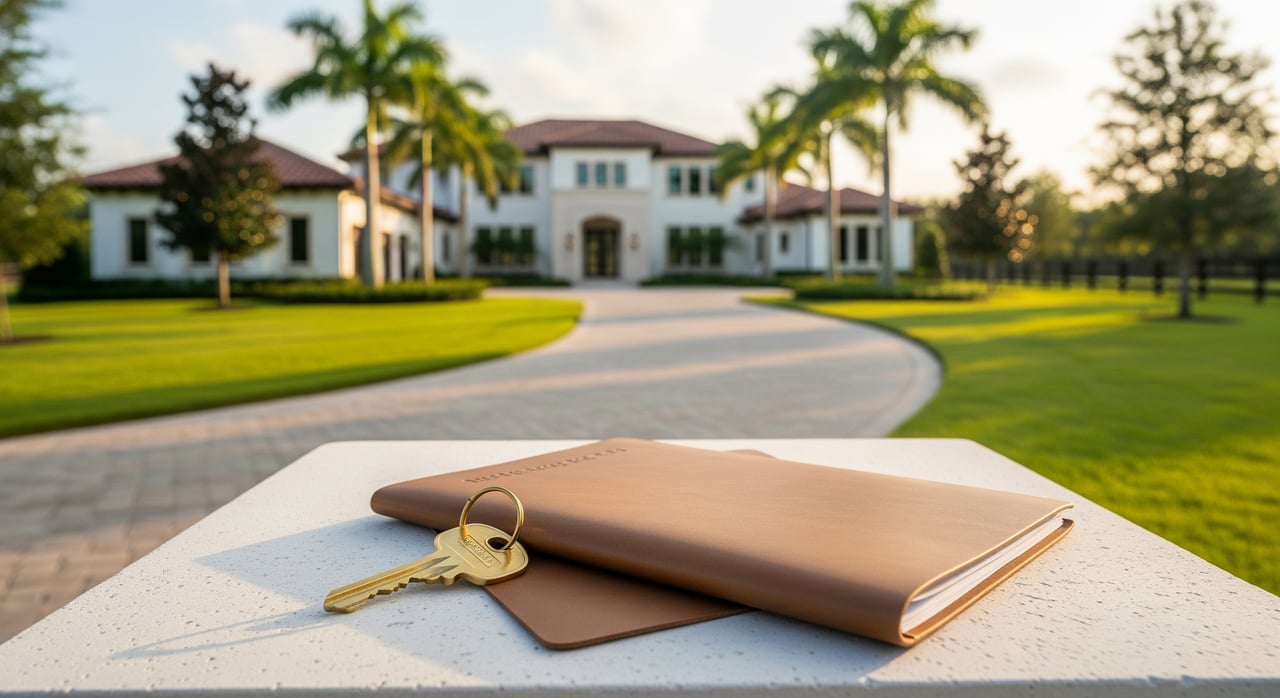
Closing Costs for Parkland Buyers: A Clear Breakdown
December 18, 2025
December 18, 2025
Buying a home in Parkland should feel exciting, not confusing. Still, many buyers are surprised by the number of line items on the final statement. If you plan to move this spring, understanding closing costs early helps you budget with confidence and negotiate the right credits. In this guide, you’ll learn what Parkland buyers typically pay, how to estimate your total, and smart ways to ask for seller help. Let’s dive in.
Your lender will list fees on your Loan Estimate. These often include an origination or lender fee, which is commonly 0.5% to 1.5% of the loan amount. You’ll also see application, processing, and underwriting charges, typically $300 to $1,200 combined.
Expect a credit report fee of about $25 to $50 and an appraisal, often $400 to $800 in Broward. Lenders also pull a flood certification, usually $10 to $25, and may charge small wire or courier fees. If your program requires mortgage insurance, that cost will appear as a monthly charge or an upfront premium depending on the loan.
In Florida, new mortgages are subject to an intangible tax commonly calculated as 0.002 times the mortgage amount. Confirm the exact rate and calculation with your lender and the Florida Department of Revenue before you close.
A title company or closing attorney handles title search, insurance, and settlement. You will typically pay for a lender’s title insurance policy. An owner’s title insurance policy is a one-time premium tied to the purchase price. Who pays the owner’s policy can vary by South Florida custom and by contract.
The escrow or settlement fee generally ranges from $300 to $900. Recording fees for deeds and mortgages are set by the Broward County Clerk and often fall between $30 and $165 per document depending on pages and attachments. Your title quote will itemize these charges.
Florida charges a documentary stamp tax on the deed, commonly cited as $0.70 per $100 of purchase price. There may also be documentary stamps or recording taxes on a mortgage or note, depending on the structure. Always verify current rates with the Florida Department of Revenue and the Broward County Clerk, since they can change.
Property taxes are prorated at closing. Your share depends on your closing date and the local millage for Broward County, the City of Parkland, and the school district. Ask the title company to use the Broward County Property Appraiser and Tax Collector data for a realistic estimate.
Many of your upfront “prepaid” charges are not fees, but deposits. Most lenders collect the first-year homeowners insurance premium at closing and fund an escrow account to pay renewals and tax bills. Insurance premiums in Broward vary based on coverage and wind risk, often from $800 to $3,000 or more for a year.
You will also pay prepaid interest from the day you close to the end of the month. Lenders commonly collect several months of property taxes into escrow. If the property is in an HOA, expect prorated dues at closing.
Inspections help you understand the home’s condition and can influence negotiations. A general home inspection typically runs $300 to $700 in our area. Many Parkland buyers also order a WDO/pest inspection, often $50 to $200, and a wind mitigation report, usually $75 to $200, which can help reduce insurance premiums.
Depending on the property, you might add roof, pool, septic, or well inspections. A survey, if required by your lender or requested for peace of mind, often runs $350 to $1,000 depending on lot size and complexity.
Many Parkland neighborhoods have HOAs. Associations often charge application or transfer fees and an estoppel fee, commonly $100 to $400. Some communities also require a capital contribution or have special assessments. Ask for these amounts early, since HOA processing can take time.
Budget for moving costs, utility transfers, and rekeying for security. While Florida closings are commonly handled by title companies, some buyers hire an attorney for extra review. If you do, attorney fees can range widely depending on scope.
As a starting rule of thumb, Parkland buyers often spend about 2% to 5% of the purchase price in closing costs, not including the down payment. Your total depends on your loan program, insurance and tax escrows, title policy custom, and state and county taxes. Get written quotes to tighten your budget.
Here is a hypothetical example for a $700,000 Parkland purchase with 20% down. Your numbers will vary, so always verify with your lender and title company.
In this scenario, a realistic range for buyer closing costs, excluding the down payment, is often $14,000 to $35,000. The biggest swings usually come from who pays the owner’s title policy, the size of insurance and tax escrows, and state and county taxes.
In parts of South Florida, sellers often pay for the owner’s title policy, but practices vary by neighborhood and market conditions. HOA estoppel or transfer fees are sometimes handled by the seller, yet this also depends on the contract. The key is to decide who pays what during negotiation and document it clearly in the contract.
Lenders cap how much a seller can credit toward your costs. Typical guidelines include the following. Always confirm the exact limit with your lender.
Credits cannot be used for your down payment except for specific allowed fees under certain programs. If a credit exceeds the program limit, your lender will reduce the allowable credit.
You can negotiate credits in two primary ways:
Use inspection results to request repairs or a credit in lieu of repairs. Keep the credit within program limits, and coordinate with your lender before signing an addendum.
Make requests at the offer stage whenever possible. If issues surface during inspections, you can revisit credits during the inspection period. If the appraisal or financing changes the math, you may need to adjust credits per the contract and the lender’s approval.
A clear plan and the right team make all the difference. When you combine accurate quotes, smart negotiation, and early HOA coordination, you can close on time and with fewer surprises.
Ready to build your exact closing-cost plan for a Parkland purchase? Reach out for a tailored estimate, negotiation strategy, and a smooth path to the closing table with Roi Danon.
October 15, 2026
October 8, 2026
October 1, 2026
September 24, 2026
September 17, 2026

September 10, 2026
September 3, 2026
September 3, 2026
August 27, 2026
Get assistance in determining current property value, crafting a competitive offer, writing and negotiating a contract, and much more. Contact me today.