Fort Lauderdale Multi Unit Investing Factors to Review
July 2, 2026
July 2, 2026
Fort Lauderdale multi-unit properties can look attractive at first glance, but experienced investors know the real story is in the details. If you are comparing duplexes, triplexes, or small apartment buildings here, you need more than a rent estimate and a quick cap rate calculation. You need to understand how local zoning, flood exposure, operating costs, and renter demand shape the deal. Let’s dive in.
Fort Lauderdale stands out as a meaningful rental market within Broward County. The city’s July 1, 2024 population estimate was 190,641, which was up 4.4% from 2020. Its 2020 to 2024 median gross rent was $1,854, and the owner-occupied housing unit rate was 54.1%.
That owner-occupied rate is lower than Broward County’s 63.6%, which suggests Fort Lauderdale has a larger rental share than the county overall. For you as an investor, that matters because it supports the idea that rental demand should be analyzed at the city and submarket level, not just through countywide averages.
Broward County’s 2022 Affordable Housing Needs Assessment also found low rental vacancy and rapidly rising asking rents. That does not mean every building is a good buy, but it does explain why well-located small multifamily properties continue to attract attention in this market.
A smart investor usually starts with the basics, then stress-tests the numbers. In Fort Lauderdale, that means looking closely at rent, taxes, insurance, flood exposure, and reserves for repairs and replacement.
The city’s median owner-occupied housing value was $486,700, which is a useful reminder that purchase prices can be substantial relative to rent. In other words, you should not assume the rent-to-price relationship will naturally leave plenty of margin after expenses.
Asking rent is only one piece of the picture. You want to confirm what current tenants are paying, whether leases are below market, and whether utility responsibilities affect the real gross income.
For conservative underwriting, Fair Market Rent benchmarks can help frame expectations. Broward County planning documents cite FY2026 Fair Market Rent levels of $2,102 for a two-bedroom unit, $2,916 for a three-bedroom unit, and $3,567 for a four-bedroom unit. Because Fair Market Rent is a gross-rent standard, it includes tenant-paid utilities other than phone, cable, satellite TV, and internet.
That benchmark is not the same as market rent for every property, but it can help you compare unit mix and test whether your income assumptions are realistic.
In South Florida, expense assumptions deserve extra scrutiny. Insurance, storm-related risk, and maintenance can materially change returns, especially on older properties or buildings with deferred upkeep.
That is why investors often ask a simple question early: Does this property still work if costs rise? If the answer depends on perfect rent growth or minimal repairs, the deal may be thinner than it first appears.
Flood exposure is part of the underwriting process in Fort Lauderdale, not an afterthought. Broward County says its current flood maps became effective on July 31, 2024, and advises owners and renters to review them.
That step is important because flood zone status can influence insurance costs, renovation planning, and long-term ownership strategy. If a property is in a Special Flood Hazard Area, your due diligence should go deeper before you move forward.
The City of Fort Lauderdale also notes that work in Special Flood Hazard Areas requires permitting. The city maintains a substantial stormwater system, including 191.76 miles of stormwater gravity main and more than 9,600 inlets, which underscores how central drainage and water management are in this market.
For you, the takeaway is clear: elevation, drainage, and insurance should be reviewed as early as rent rolls and tax records.
One of the biggest mistakes investors make is trusting the listing description without confirming the parcel’s actual zoning. In Fort Lauderdale, the first due-diligence step should be checking the city’s planning resources, including its interactive zoning map, parcel zoning tools, and ULDR code.
That matters because a property’s legal use, density, and site requirements may not match the shorthand language used in marketing remarks. A building that looks like a simple value-add opportunity may involve a more complex zoning review than expected.
For small multifamily properties, Fort Lauderdale’s duplex and low-rise multifamily categories deserve special attention. The city code says RM-15 is intended for single-family and low-rise multifamily residences as a transition district, with a maximum density of 15 dwelling units per net acre.
That means RM-15 is not just about a headline unit count. It is also about location, form, and how the site fits the district’s standards.
The city’s code definitions also matter. Fort Lauderdale defines a multifamily dwelling as a building or buildings containing multiple dwelling units occupied by more than two families, including apartments, condominiums, and coach homes.
In practical terms, if you are evaluating a triplex, it usually belongs in the broader multifamily category rather than the duplex-specific bucket. That distinction can affect how you assess legal use and future plans for the property.
Buying the property is only the start. Investors also pay attention to the local rules that apply once the building is operating.
The City of Fort Lauderdale requires landlord registration for residential rental properties. The registry does not apply to vacation rentals or owner-occupied units, which is important if you are comparing different ownership or rental strategies.
If your plan involves short-term rentals, the city separately requires vacation-rental licensing and registration. State and county licensing must come first, and city inspection requirements follow after that.
For small multifamily properties with partial owner occupancy, tax treatment can shift as well. Broward County’s Property Appraiser says owners must notify the office when a duplex, triplex, or small apartment building is partially used as a homestead and other portions are rented out.
That does not answer every tax question, but it is a useful reminder that ownership structure and occupancy can affect the property’s tax picture.
Even a strong location cannot fully compensate for a poorly maintained property. Investors look beyond cosmetic updates and focus on whether a building is functional, safe, and easy to lease.
Broward County says rentals must be maintained in a clean and safe condition. That includes compliant plumbing and heating, fully functioning and locking doors and windows, and freedom from pests.
These basics matter because they influence tenant retention, repair budgets, and leasing speed. A property that needs major work to meet these standards may require more capital than the initial price suggests.
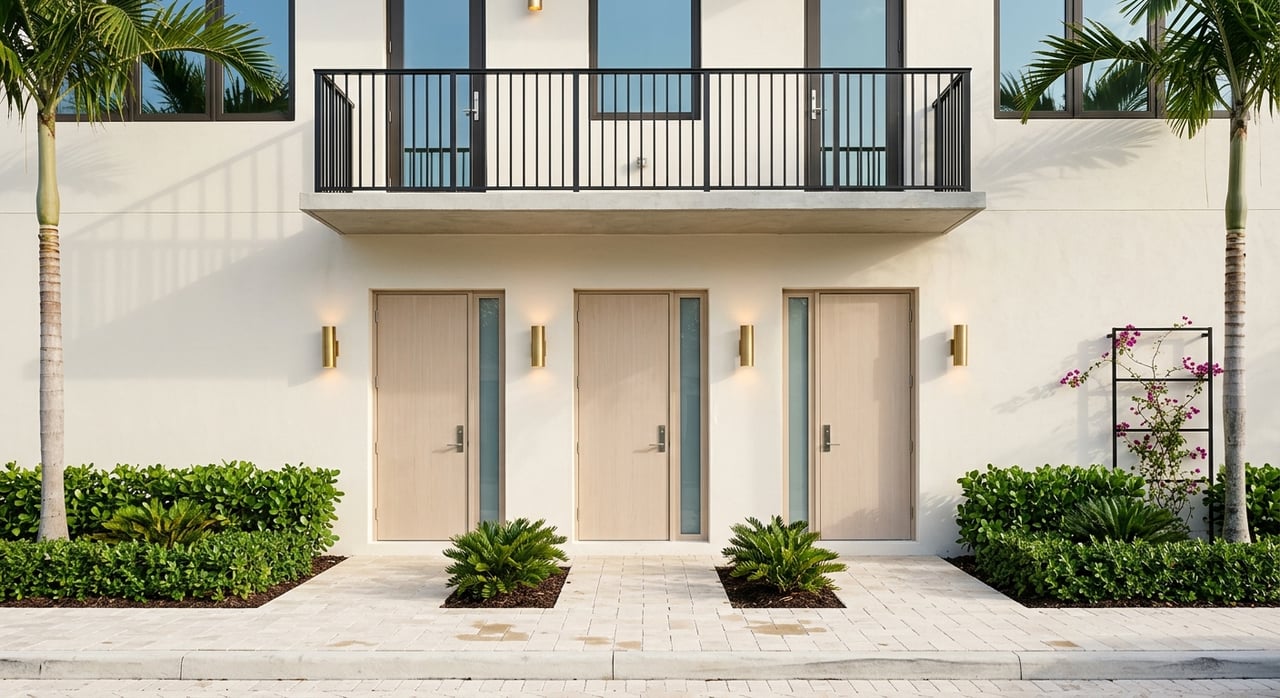
Fort Lauderdale’s duplex rules also emphasize separate principal entrances for each unit facing the street. For investors, that detail affects usability, curb appeal, and how the property presents to future tenants.
In Fort Lauderdale, location is not just about a neighborhood name. Investors usually want a property that matches renter demand, supports practical daily living, and fits the broader urban fabric of the city.
City planning initiatives in places like Uptown and the Northwest Regional Activity Center reflect support for mixed-use and transit-supportive development. That matters because renters often value walkability, proximity to services, and easier commuting patterns alongside rent level and unit size.
A strong multi-unit opportunity often combines three things:
When one of those pieces is weak, the investment story gets harder to support.
It is easy to look at Broward County as one market, but investors usually get better insights by comparing submarkets. Fort Lauderdale’s median gross rent was $1,854, while Broward County’s was $1,907 and nearby Pompano Beach’s was $1,724.
That spread shows why one countywide rent assumption can be misleading. If you are evaluating a Fort Lauderdale property, you should compare it to nearby competing areas and to the specific part of the city where the building sits.
This is especially important when you are deciding whether a property’s current rent is below market, in line with market, or already near the top of what the location can support.
Some deals require another layer of due diligence before you can price risk correctly. If a parcel sits in a historic district, or if your intended use depends on a zoning interpretation, additional review may be needed through the city’s Historic Preservation process and zoning staff.
That does not automatically make the property a poor investment. It simply means the path to renovations, expansion, or repositioning may be more detailed than a standard purchase.
If you are shopping for a Fort Lauderdale multi-unit property, the strongest opportunities usually are not the ones with the flashiest headline numbers. They are the ones where the legal use is clear, the location supports steady renter demand, the building condition is manageable, and the expense structure has been underwritten honestly.
That kind of evaluation takes local knowledge and disciplined review. If you want help identifying Broward opportunities, comparing submarkets, and negotiating with a clear eye on risk and upside, Roi Danon offers concierge-level guidance for investor and small commercial transactions across South Florida.

August 6, 2026

July 23, 2026

July 16, 2026
July 9, 2026

July 9, 2026

July 9, 2026
July 2, 2026
June 25, 2026
June 18, 2026
Get assistance in determining current property value, crafting a competitive offer, writing and negotiating a contract, and much more. Contact me today.